Blog

What is Cascade Genetic Testing?

Is the process of informing family members of a genetic condition discovered within the family, followed by family members getting tested for the condition.

It can identify who inherited the mutation and who did not. This will allow those who have inherited the mutation to take steps to reduce the risk of cancer. Genetic testing saves lives.

Cascade Testing is one of the most important steps in breaking the cycle of hereditary cancer in families. This testing-sharing-testing-sharing of genetic information plays a vital role in protecting the health and lives of loved ones in families with a history of cancer.

It requires a number of important steps:

1. Having testing done. 2. Sharing that information, which includes test results and the specific mutation in the gene.

In Lynch syndrome mutations in the following genes may increase the risk of cancer: MLH1, MSH2, MSH6, PMS2 and ЕРСАМ.

New prostate cancer test means some men could avoid unnecessary treatment

30% of patients have an aggressive type of this cancer needing urgent treatment, about 70% have slow-growing cancer and can be monitored without immediate treatment.

This new test was developed out of concerns over-treatment was becoming an issue for men with this type of cancer who may not need treatment. 

https://www.irishexaminer.com/news/arid-41558602.html?fbclid=IwY2xjawIJav1leHRuA2FlbQIxMQABHV–aPM8B4X_2X6JskIYQW7kjzyFYRIGV6VbTNk2DbfSROCumCTCnsOC2g_aem_D-aR8RjS62zVIh3i95144Q

Conclusion: https://bjui-journals.onlinelibrary.wiley.com/doi/10.1002/bco2.474?fbclid=IwY2xjawIJbD1leHRuA2FlbQIxMAABHUSnhz-ugdbis31f1RIiZ29Pfrmoz_JXAWilNVme-L3aFsCA35khswqsMA_aem_30sxxBEWlboKs6aqWleGgA

Biopsy-based MCRS improves risk stratification over standard clinical and pathological information and optimises patient management after diagnosis of prostate cancer.

Primary Care Research into Cancer(PRICAN)

What is PRICAN?

Cancer represents a significant public health challenge in Ireland. Forecasts also indicate a potential doubling of cancer diagnoses between 2010 and 2040, primarily due to an ageing population. 

In recent years, there has been a shift in cancer control strategies towards prioritising prevention and early diagnosis, as the most cost-effective long-term approach to cancer control.

The National Cancer Strategy explicitly calls for an expanded role for general practitioners (GPs) in managing the entire cancer continuum, from prevention and early diagnosis to treatment and ongoing survivor support.

Despite its increasing importance in cancer control, primary care research has historically received less funding compared to laboratory and hospital-based research.

Whilst screening enables early detection of some presymptomatic cancer, approximately 85% of cancers are diagnosed after the onset of symptoms . This fact underscores the importance of equipping primary care with robust clinical guidelines and efficient referral pathways. 

The anticipated rise in cancer incidence demands proactive measures to strengthen the Irish healthcare system. By recognising the critical role of primary care across the cancer care continuum, and adopting a strategic approach to investment in research, Ireland can develop and implement evidence-based policies and strategies. This approach will not only mitigate the impacts of increasing cancer incidence but also position Ireland at the forefront of innovative and effective cancer care.

https://prican.eu

Should HSE hire a team of engineers?

Absolutely.

@mccarthymt7 “If the HSE wants to improve efficiency in the healthcare system, they should hire a team of engineers with medical experience to examine the processes in place in service delivery, and give them the authority to effect changes in service provision that would maximise patient flow. Otherwise, more nurses, more HSCPs, more doctors, and more space to work in would help, and is needed across the board. The imbalance between capacity and demand at the point of provision of care seems glaring to me.”

The very obvious shortages of hospital beds, theatres, diagnostic, and other facilities across the country need to be addressed, together with filling the hundreds of consultant posts that are vacant or filled on a temporary basis.

Adventures of a Sick Doctor

Still Working

I am not actually getting chemo. I am getting cetuximab, which is a monoclonal antibody and therefore known as a targeted therapy, rather than a chemotherapy. 

Collectively, the various gunks that they administer to knobble cancer are called Systemic Anti-Cancer Treatment, or SACT. 

https://adventuresofasickdoctor.blogspot.com/2025/01/still-working.html

The tumour histopathology “glossary” for AI developers

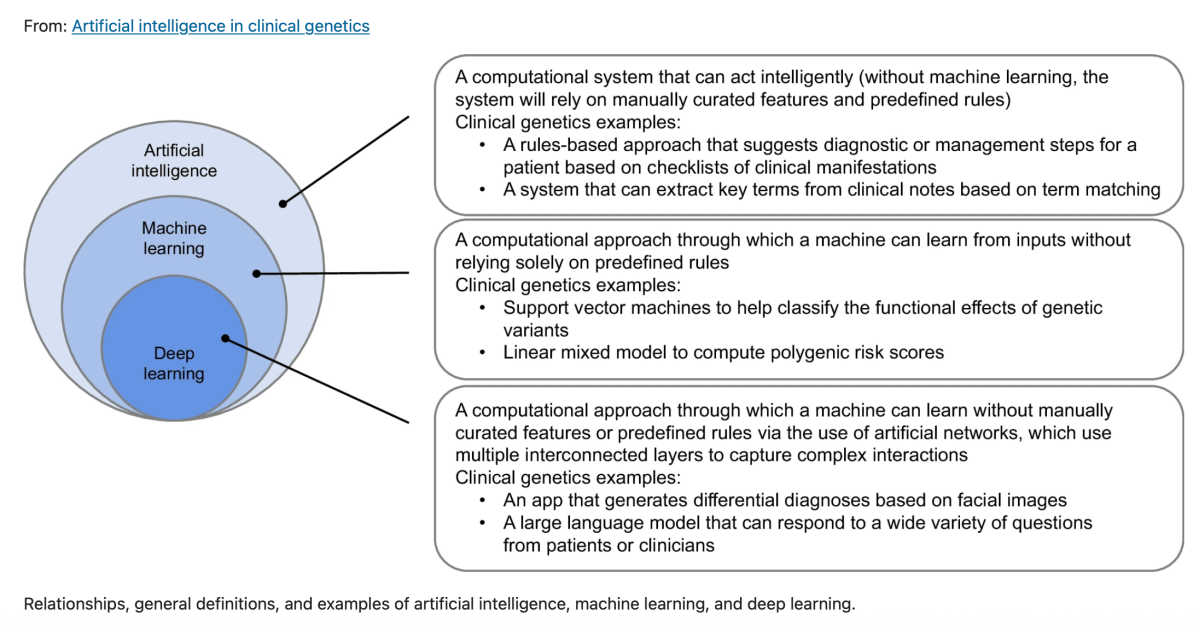
The applications of artificial intelligence (AI) and deep learning (DL) are leading to significant advances in cancer research, particularly in analysing histopathology images for prognostic and treatment-predictive insights.

However, effective translation of these computational methods requires computational researchers to have at least a basic understanding of histopathology. In this work, we aim to bridge that gap by introducing essential histopathology concepts to support AI developers in their research. 

Challenges and outlook

To be implemented into routine practice, an AI algorithm needs several indispensable properties, i.e.,

clinical relevance, high accuracy, rapid implementation, fast computation, and last but not least, user-friendliness.

https://journals.plos.org/ploscompbiol/article?id=10.1371/journal.pcbi.1012708#abstract0

EPI what?

Epigenetics: Is a way of influencing how our genome is regulated without the DNA code itself being changed. Epigenetics can determine when genes are turned on and off (also referred to as gene expression), and which proteins are produced as a result. It can even control the structure of the genome, relaxing the tightly packed chromosomes to allow the factors which control gene expression access to the genes within.

One example of an epigenetic modification is methylation, which is associated with switching genes off. Here, a chemical called a methyl group attaches to a region near the start of a gene and prevents it from being switched on.

Lynch syndrome also illustrates the significance of the epigenetic component in cancer development. Inactivation of tumor suppressor genes by epigenetic mechanisms is an acquired property of many tumors developing in Lynch syndrome.

https://www.genomicseducation.hee.nhs.uk/education/core-concepts/what-is-epigenetics/

Neoadjuvant immunotherapy for locally advanced/metastatic mismatch repair deficient colorectal cancer: a two-year institutional experience.

Loss of MMR functioning, termed MMR deficiency (MMRd), leads to microsatellite instability (MSI),2 a hypermutated phenotype, and increased cancer susceptibility. Lynch syndrome patients are at an increased risk for a number of different malignancies, but most commonly develop colorectal and endometrial cancer.

Findings add to the growing body of evidence in support of neoadjuvant immune checkpoint inhibitors for MMRd CRC, and highlight the importance of screening all CRC for MSI-H/ MMRd.

Influence of preoperative Lynch syndrome diagnosis on surgery in patients with colorectal cancer.

Lynch Syndrome (LS) can guide surgery for colorectal cancer (CRC), particularly for MLH1/MSH2 carriers, who may benefit from extended procedures: total colectomy (TC) or total proctocolectomy (TP).Investigated timing of germline genetic testing (GGT) and surgical approach in patients (pts) with LS and CRC.

Conclusions: GGT performed pre-surgery for a new diagnosis of CRC was more likely to result in extended procedures, especially in MLH1/MSH2/EPCAM carriers. More data in RC is needed to better understand the influence of GGT on surgical approach.

https://meetings.asco.org/abstracts-presentations/241883