Blog

Living Beyond the Diagnosis: Lynch Syndrome Awareness

My paternal family medical history is marked with early-onset colorectal cancer. Learning about my genetic status was a life-changing experience. The discovery that my condition was hereditary meant that my family members, including my son, could also be at risk. Certified genetic counseling played a crucial role in my journey, helping me comprehend the significance of genetic testing and how to manage my health moving forward. 

If you meet one or more of the red flags below, I urge you to consult with your doctor and a certified genetic counsellor: 

  • Family member with a confirmed diagnosis of Lynch syndrome 
  • Colorectal and endometrial cancer diagnosis at any age, particularly after pathology testing shows alterations related to Lynch syndrome
  • Multiple primary cancer diagnoses
  • Several family members have had cancers related to Lynch syndrome.

Despite the challenges, living with Lynch syndrome has empowered me to make informed health choices, advocate for better healthcare, and support others, striving for a healthy, fulfilling life.

https://www.ihadcancer.com/living-beyond-the-diagnosis-lynch-syndrome-awareness

One test to detect multiple cancers – where are we now?

Most cancers diagnosed at an earlier stage have a better prognosis. Detecting and diagnosing cancer earlier can mean there are more treatment options for patients and, ultimately, can help people survive cancer and lead longer, better lives.  

What are multi-cancer tests?

As described above, an MCT is a tool that searches for multiple cancers in one sample, typically blood, urine, breath, or stool. All MCTs share some similarities, but the ways they identify cancers can be slightly different.  

MCEDs(multi-cancer earlier detection tests) could completely change what cancer screening looks like by making it possible to screen for multiple cancers with one test. MCEDs could also allow us to screen for cancers that aren’t covered by individual screening programmes, including less common cancers. That means MCEDs could be a more efficient way to find more types of cancer earlier, when they are more curable, helping people live longer, better lives. 

https://news.cancerresearchuk.org/2024/06/12/multi-cancer-tests-mced-tests-where-are-we-now/

Individual Health Identifier (IHI)

Did you know….

The Health Identifiers Act 2014 was enacted by the government to allow two new national data collections–called the National Register of Individual Health Identifiers and the National Register of Health Service Provider Identifiers to be created and operated.

An Individual Health Identifier (IHI) has the following benefits for you:

Improved accuracy in identifying you and your medical records will
lead to safer and better care being provided to you.

Improved accuracy in identifying and associating your records in
different healthcare organisations.
Your health information can be shared safely and seamlessly
between health service providers, for example on referral letters
sent from a private GP to a public hospital.

The use of an Individual Health identifier also enables the
electronic transfer of your health information, which results in faster
care for you.

Medical or clinical information will NEVER be stored on your IHI record. Health
service providers may however use your IHI, to uniquely identify you, when
communicating with other health service providers about your care for example
when a medical consultant is corresponding with your GP or visa versa.

What increases my risk of uterine (womb) cancer?

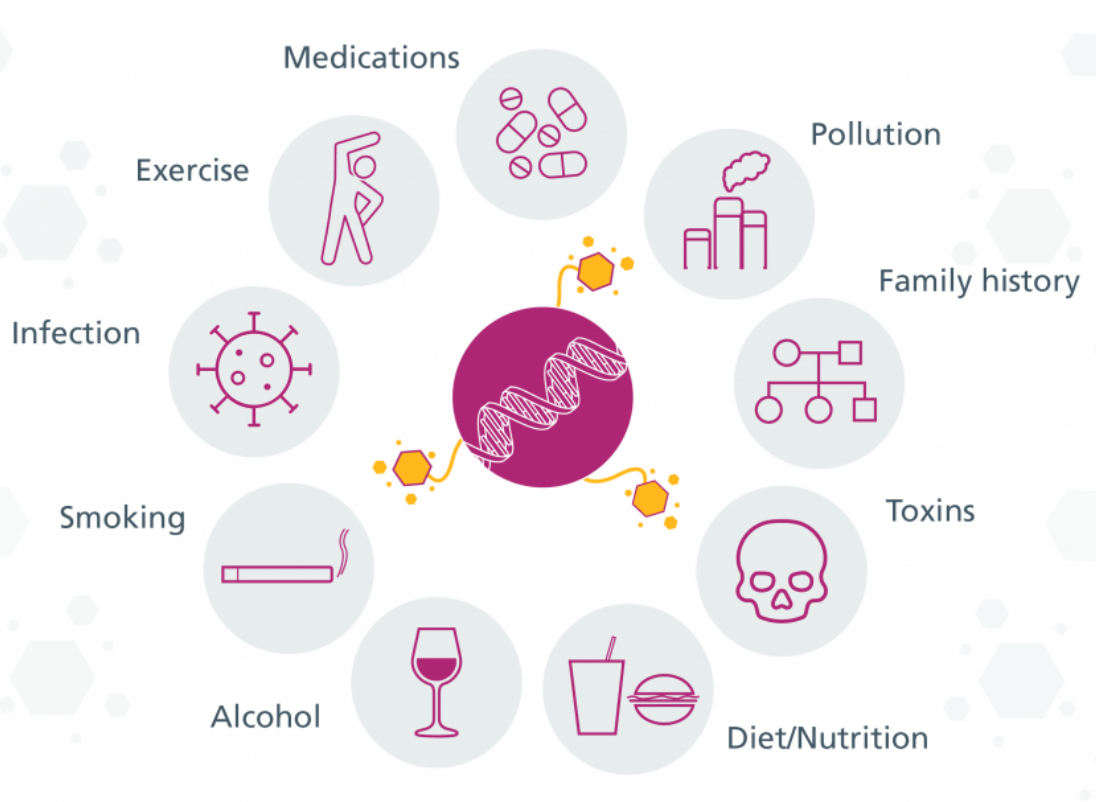
The cause of uterine (womb) cancer is unknown. But there are certain things called risk factors that can increase your chance of developing the disease. These include:

  • Age: It is more common in women after the menopause between the ages of 50 and 64.
  • Being overweight: If you are overweight, your risk of uterine cancer is increased.
  • Hormone replacement therapy (HRT): If you are taking oestrogen-only HRT for a long time after the menopause, your risk of uterine cancer is slightly increased.
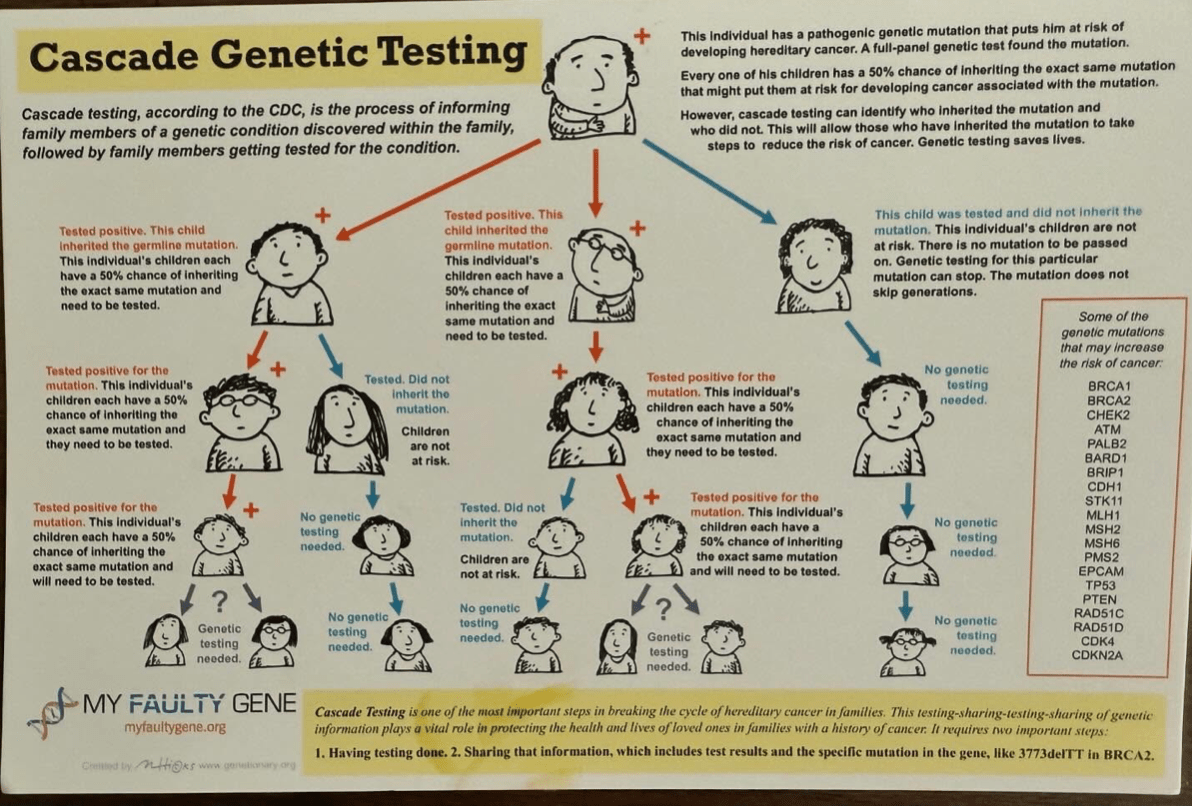
  • Family history: Family history of uterine cancer in a first degree relative (mother, sister, daughter). If you have an inherited faulty gene, it raises your risk of developing uterine or bowel cancer. In a small number of families, this faulty gene can cause a condition called Lynch Syndrome .
  • No pregnancies: If you have not had children or never been pregnant, your risk of uterine cancer is increased.
  • Polycystic ovaries: If you have polycystic ovaries, your risk is increased. This is a condition where cysts grow in the ovaries.
  • Menstrual history: If your started your periods early in life and / or started your menopause later, your risk is higher. 

https://www.cancer.ie/cancer-information-and-support/cancer-types/uterine-womb-cancer/what-increases-my-risk-of-uterine-womb-cancer

Incidences of colorectal adenomas and cancers under colonoscopy surveillance suggest an accelerated “Big Bang” pathway to CRC in three of the four Lynch syndromes

Conclusions: Colonoscopy prevented CRC in path_PMS2 carriers but not in the others. Our findings are consistent with colonoscopy surveillance blocking the adenoma-carcinoma pathway by removing identified adenomas which might otherwise become CRCs. However, in the other carriers most CRCs likely arised from dMMR cells in the crypts that have an increased mutation rate with increased stochastic chaotic probabilities for mutations. Therefore, this mechanism, that may be associated with no or only a short sojourn time of MSI tumours as adenomas, could explain the findings in our previous and current reports.

path_MMR:Pathogenic or likely pathogenic variant in one of the MMR genes (MLH1, MSH2, MSH6, or PMS2)

https://pubmed.ncbi.nlm.nih.gov/38741120/

Overall….colonoscopy works either by preventing some cancer, or where this is not biologically possible- by diagnosing cancer early.

Cork doctor with bowel cancer: ‘More people are getting it under age 50’

She talks with humour about her cancer journey. “I try not to take anything too seriously. With cancer and advanced cancer — and what might be called terminal cancer — people can be unsure how to talk about it. I’m very open about serious illness and humour’s important in helping have these conversations.”

She started her blog, Adventures of a Sick Doctor, after her first diagnosis, to let scattered-around-the-globe family and friends know how she was doing. She never expected its broad public appeal.

“Changes in bowel habits, losing weight, blood in poo; any of these, it’s very important to visit the GP. If you’re between 59 and 70, sign up for bowel screening.

“It’s one of the best ways of avoiding the bowel cancer journey I’ve been on.”

https://www.irishexaminer.com/lifestyle/healthandwellbeing/arid-41479222.html?fbclid=IwY2xjawFeCMNleHRuA2FlbQIxMQABHfiyLhYeqZ-3wXip9srbTmFVtYCGyElDA2XikxDvGWbvY_zDOa3nz1pVSw_aem_AmQPPxy0WF2Du1QNTqoxSQ

Study results further support the use of neoadjuvant immunotherapy in dMMR colon cancer

Three-year disease-free survival data from NICHE-2 and findings from NICHE-3 add to current knowledge on the benefits and provide further evidence for neoadjuvant immunotherapy in the treatment of mismatch repair-deficient (dMMR) colon cancer

https://dailyreporter.esmo.org/esmo-congress-2024/gastrointestinal-cancers/study-results-further-support-the-use-of-neoadjuvant-immunotherapy-in-dmmr-colon-cancer

[GDPR] is being used in Ireland as a reason not to do things, as an excuse not to share data

Lynch Choices

  • Lynch syndrome (‘Lynch’) is an inherited condition that increases the chance of developing certain cancers. The type of cancer depends on the genes involved.
  • This website helps people with Lynch to make choices that are right for them. It is designed to be used with support from the genetics service, GPs, healthcare teams in the community, charities and patient groups.
  • If you are concerned about Lynch but have not been diagnosed, please speak to your GP or genetics service.
  • Each session helps you think about your choices at home, so you are ready to talk through your choices with a GP, genetics or other specialist.

https://canchoose.org.uk

Where do non-invasive colorectal cancer tools ‘FIT’ alongside colonoscopy in the surveillance of high-risk patients?

There is increasing interest in the use of less-invasive approaches to investigation of at-risk populations, driven in part by the COVID19 pandemic as resources have been increasingly constrained, alongside expanding evidence of clinical effectiveness.

Fecal hemaglobin immunochemical testing(FIT) has been validated in screening and symptomatic populations, is cost-effective, and acceptable to patients.

As a quantitative assay, lower fHb concentration thresholds increase CRC sensitivity albeit with decreased specificity, however FIT has a lower sensitivity for advanced adenomas of around 40-60%2. Therefore a ‘FIT only’ strategy may theoretically result in fewer prevented CRCs, notwithstanding a limited understanding of the natural history of familial CRC. However the estimated reduction in risk by removal of precursor advanced adenomas at colonoscopy provides an opportunity for a less-invasive combined strategy using FIT.

In conclusion the authors have developed a compelling rationale for a combined FIT:colonoscopy strategy where previous data has indicated that FIT alone would not be sufficient. Although their study did not identify differences according to levels of CRC risk, further refinement of risk estimates and investigative strategies may facilitate risk-stratified mixed-modality surveillance strategies.

https://www.gastrojournal.org/article/S0016-5085(24)05458-1/pdf