Blog

Does cancer run in my family?

Cancer in your family may be caused by an inherited genetic change if:

  • You have a close (‘first degree’) relative, such as a parent, brother, sister or child, who has been diagnosed with 2 separate cancers. For example, bowel cancer and endometrial (womb) cancer
  • 2 or more close relatives on the same side of your family have had the same cancer
  • You or one of your relatives have a cancer most commonly seen in the opposite sex (for example, male breast cancer)
  • You have Ashkenazi Jewish ancestry
  • You have had cancer at a younger age than commonly seen (for example, bowel cancer under the age of 50)

This list is a guide only. If any of the above points apply to you, it is possible, but not certain, that you have an inherited genetic cause for cancer in your family.

https://www.cancer.ie/cancer-information/about-cancer/cancer-and-genes

https://www2.hse.ie/conditions/lynch-syndrome/

COPING WITH CANCER: SEEING A COUNSELLOR

I never felt like “it” couldn’t happen to me. It’s just genetics. Luck of the draw. It’s how the universe works. Not to make light of things, but in a phrase it is what it is.”

“Neither did I feel the the need for a support group. The last thing I wanted to do when I wasn’t being a cancer patient is be a cancer patient.”

Lynch Syndrome UK – New Website

Check out their newly launched version….lots of information that you might find useful.

https://www.lynch-syndrome-uk.org

The responsibility of health: shifting the focus from individuals to systems

Policy translations that solely place responsibility on individuals can exacerbate inequalities and prove counterproductive.

Shifting the focus to systemic actions can promote environments that foster individual healthy choices. This transformation can only be achieved through measures that acknowledge the boundaries of individual responsibility for health and encourage shared accountability within a wider societal context where social and commercial determinants are addressed.

By focusing on systemic solutions rather than individual blame, we can create a society where health equity is achievable and sustainable for all.

https://www.thelancet.com/journals/lanpub/article/PIIS2468-2667(25)00013-1/fulltext?dgcid=bluesky_organic_corr25_lanpub

The diagnostic accuracy of the faecal immunochemical test(FIT) for the detection of early-onset colorectal cancer: an age-stratified analysis in South West England

The faecal immunochemical test (FIT) is a diagnostic triage tool for patients presenting with clinical features of CRC in primary care, though its performance in individuals under 50 years is not well established.

Conclusions: FIT performs excellently for patients aged 40-49; however, it may not be used optimally in patients <40 years. A more targeted strategy is needed to guide investigation in younger patients.

https://pubmed.ncbi.nlm.nih.gov/40847011/

Universal Healthcare Insurance model

Sláintecare is Ireland’s reform plan to create a universal, single-tier health and social care system based on patient need, not ability to pay, moving away from its current two-tier system

Sláintecare 2025+ aims to forge the way towards accessible, affordable, high-quality, healthcare for the people of Ireland when they need it, where they need it. 

michaeltmccarthy @mccarthymt7


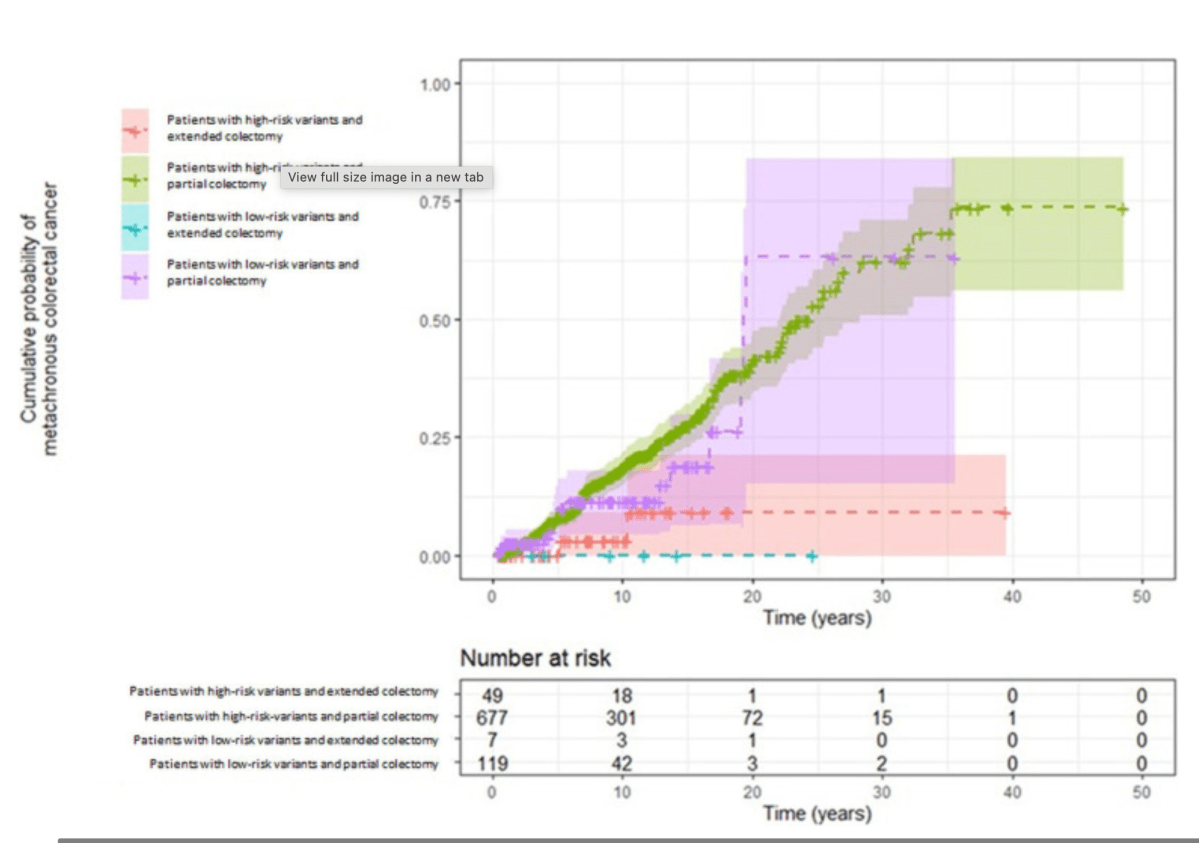
Prospective Lynch syndrome database

A prospective Lynch syndrome database is important because it allows researchers, clinicians, and policymakers to collect and analyse long-term, standardised data on people with Lynch syndrome (LS).

(Using Chat GPT)

📌 In short: A prospective Lynch syndrome database is essential because it produces high-quality, unbiased evidence on cancer risks, surveillance effectiveness, and preventive strategies, directly improving patient care and shaping clinical guidelines.

Here are the key reasons why it matters, based only on reliable clinical and research perspectives:

  1. Natural history understanding
    • Prospective data (collected forward in time) helps clarify the true risks of different cancers (colorectal, endometrial, ovarian, gastric, etc.) in Lynch syndrome carriers.
    • It reduces biases compared to retrospective reports, which often overestimate risks due to selective reporting of severe cases.
  2. Better risk stratification
    • Different mismatch repair (MMR) gene variants (MLH1, MSH2, MSH6, PMS2, EPCAM) carry different cancer risks.
    • A prospective database helps define more precise, gene-specific and even sex-specific risk estimates, which guide personalized surveillance.
  3. Evaluation of surveillance effectiveness
    • Prospective registries allow direct measurement of how colonoscopy intervals (e.g., every 1–2 years) affect cancer incidence, stage at diagnosis, and mortality.
    • They can test whether surveillance reduces advanced cancers, enabling evidence-based guideline updates.
  4. Assessment of preventive strategies
    • Allows evaluation of risk-reducing interventions such as aspirin (e.g., CAPP2/CAPP3 trials), prophylactic surgeries, or lifestyle modifications.
    • Can help identify who benefits most from preventive measures.
  5. Improved clinical counseling
    • Physicians and genetic counselors can give patients more reliable, individualized risk information, reducing uncertainty and supporting informed decisions.
  6. Data for health policy
    • National or international databases provide evidence for cost-effectiveness of surveillance and preventive programs.
    • This supports resource allocation and insurance coverage for Lynch syndrome management.
  7. Research opportunities
    • Creates a resource for studying modifiers of cancer risk (genetic, environmental, lifestyle).
    • Enables collaboration across centers and countries for rare cancers within LS populations.

https://plsd.eu

BETWEEN HOPE AND HYPE: WHAT CANCER BLOOD TESTS REALLY MEAN FOR PATIENTS

For us as advocates, the message is clear: celebrate the progress, but guard against the hype. Stories of individual breakthroughs are moving — but without long-term, carefully designed trials that measure not just detection but survival, we risk creating false reassurance or unnecessary harm.

The real “holy grail” is not simply detecting cancer earlier. It is learning to distinguish between cancers that demand urgent treatment and those that do not; between signals of danger and signals of noise. Only then will early detection truly translate into lives saved.

“Patients” are the actual end users of Medical Research.

“Patient” partners improve researcher understanding of the real life priorities and impact of their work.  

Few or no people define or refer to themselves as patients. They understand that a patient is less than a whole person, is less than what they are. I would prefer thinking of ‘people’ engaged in their health and health care.

Patients” can also be experts in the lived experience of their own diagnoses,  who contribute to medical research and education teams as partners in meaningful academic projects.

Young researchers from the ColoMARK network across Europe

n December 2023 PVCR and Bowel Cancer Ireland (previously Irish Colorectal Cancer Community) ran an in-person training workshop for 10 young researchers from the ColoMARK network across Europe. These 10 young researchers are now releasing a ColoMARK video series. 
These short videos offer a glimpse into their individual research projects on colorectal cancer detection and monitoring, showcasing the interdisciplinary and cutting-edge work being conducted within the ColoMARK MSCA Doctoral Network.

New videos are released weekly. 

Watch and subscribe to the series on their YouTube channel:
https://www.youtube.com/@ColoMARK_DN