Author: Lynch Syndrome Ireland
EPI what?
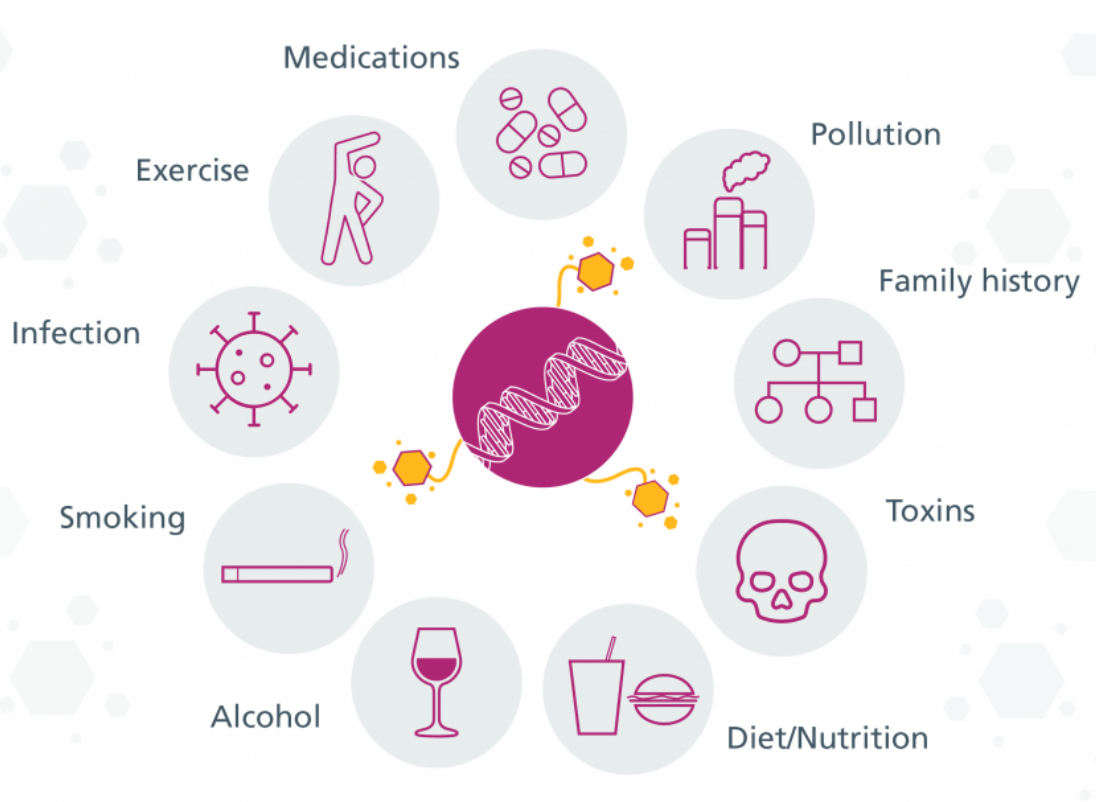
Epigenetics: Is a way of influencing how our genome is regulated without the DNA code itself being changed. Epigenetics can determine when genes are turned on and off (also referred to as gene expression), and which proteins are produced as a result. It can even control the structure of the genome, relaxing the tightly packed chromosomes to allow the factors which control gene expression access to the genes within.
One example of an epigenetic modification is methylation, which is associated with switching genes off. Here, a chemical called a methyl group attaches to a region near the start of a gene and prevents it from being switched on.
Lynch syndrome also illustrates the significance of the epigenetic component in cancer development. Inactivation of tumor suppressor genes by epigenetic mechanisms is an acquired property of many tumors developing in Lynch syndrome.
https://www.genomicseducation.hee.nhs.uk/education/core-concepts/what-is-epigenetics/
Neoadjuvant immunotherapy for locally advanced/metastatic mismatch repair deficient colorectal cancer: a two-year institutional experience.
Loss of MMR functioning, termed MMR deficiency (MMRd), leads to microsatellite instability (MSI),2 a hypermutated phenotype, and increased cancer susceptibility. Lynch syndrome patients are at an increased risk for a number of different malignancies, but most commonly develop colorectal and endometrial cancer.
Findings add to the growing body of evidence in support of neoadjuvant immune checkpoint inhibitors for MMRd CRC, and highlight the importance of screening all CRC for MSI-H/ MMRd.
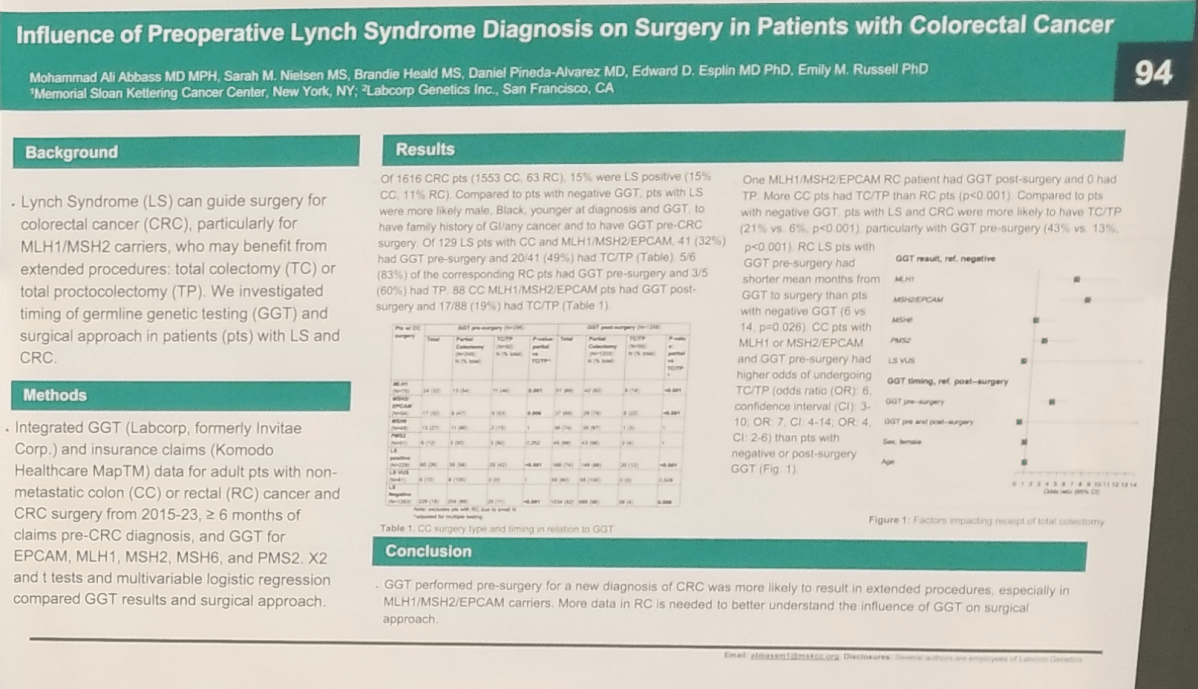
Influence of preoperative Lynch syndrome diagnosis on surgery in patients with colorectal cancer.
Lynch Syndrome (LS) can guide surgery for colorectal cancer (CRC), particularly for MLH1/MSH2 carriers, who may benefit from extended procedures: total colectomy (TC) or total proctocolectomy (TP).Investigated timing of germline genetic testing (GGT) and surgical approach in patients (pts) with LS and CRC.
Conclusions: GGT performed pre-surgery for a new diagnosis of CRC was more likely to result in extended procedures, especially in MLH1/MSH2/EPCAM carriers. More data in RC is needed to better understand the influence of GGT on surgical approach.
Young Onset Gastrointestinal Cancers: A needs analysis
The global incidence of Young Onset ( YO) cancers diagnosed in adults under 50 years, is increasing for unknown reasons.
This study(88 participants) assessed the holistic needs of these patients through a mixed methods approach.
Conclusions: This needs analysis highlights the importance of specialised clinical pathways for young onset GI cancer patients focusing on these unique and complex needs. Financial supports, conversations regarding sexual health/function, fertility preservation and psychosocial support are critical areas requiring structured intervention.
Know your family history
Many men with cancer in the family worry that they are at greater risk of getting it themselves. But this isn’t the case for most people. Cancer is a common disease among older people, so most families will include at least one person who has had cancer.
The more relatives who have had cancer, and the younger they were at diagnosis, the stronger your family history. You may have a strong family history if any of these situations apply to you:
- More than two close relatives on the same side of your family have had cancer.
- The cancers developed when they were young (under the age of 50).
- One of your relatives has had a gene fault found by genetic tests.
5 – 10% of cancers are linked to an inherited gene fault.
What should I do if I have a family history of cancer?
Talk to your doctor who can help you find out if your family history of cancer is of concern. Your doctor may suggest that you visit regularly for screening. In this way, you can pick up problems early.
Cancer in the Family
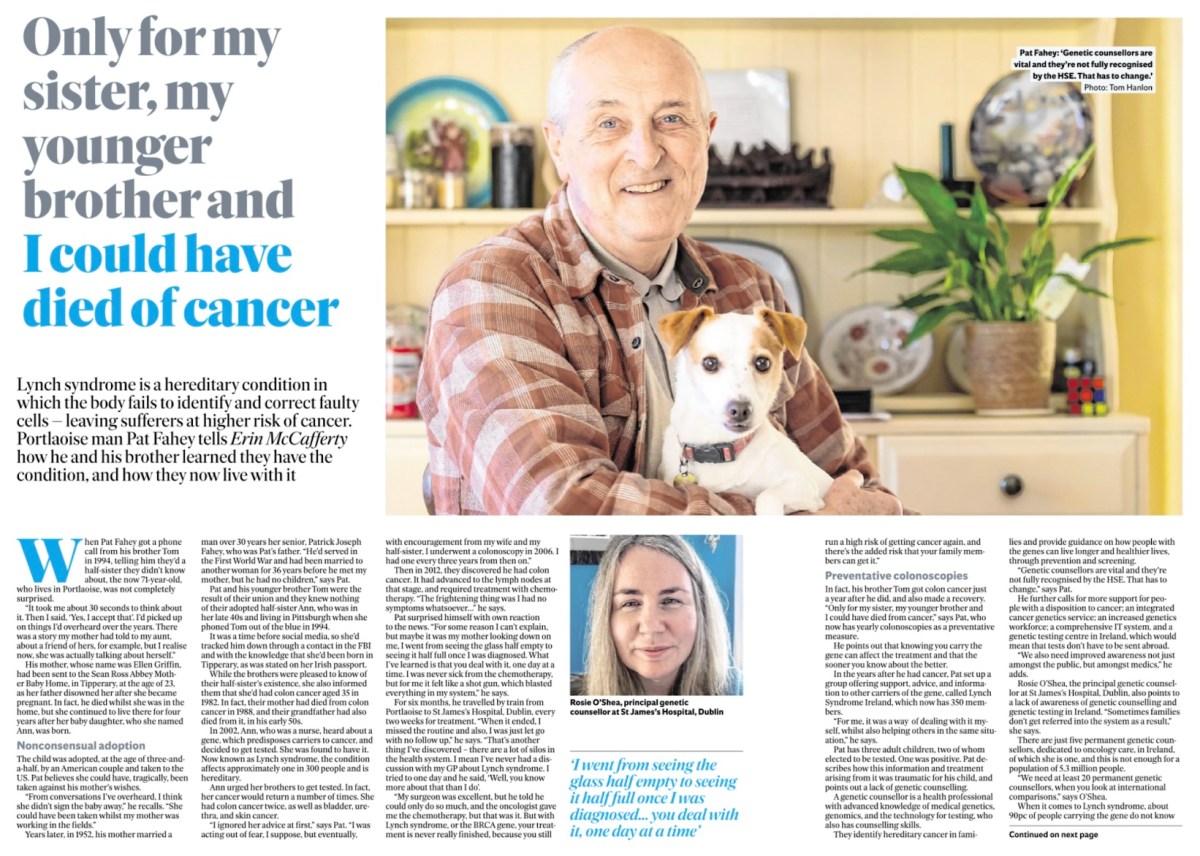
If Lynch syndrome runs in your family you really need to know.
“Much of our work around Lynch syndrome is preventing cancer before it starts”
No other landscape in medicine has changed as drastically as the field of Clinical Genetics – Is Ireland behind the curve?
Advances in technology have been a major driver of the explosion of knowledge in genetics, now allowing us to sequence the entire human genome in a short period of time and at a fraction of the cost of previous years.
This has led to a better understanding of the natural history of cancer, the ability to assess genetic risk for cancer across populations, the development of clinical management strategies to reduce cancer risk, the development of novel therapeutic agents which target genetic alterations, and to improved education of patients and providers about genetic risk.
Hereditary cancer is hard enough to navigate, so we are thankful for patient-friendly information to help inform the decision-making process.
https://www.stjames.ie/cancer/yourtreatmentandcare/servicesandtreatments/cancergeneticsservice/
Genetic testing is a vital tool in enabling individuals to be proactive in their health care to achieve the best possible outcomes.
It’s very important for everyone to understand their cancer risks based on their personal or family history since their personal risk level may necessitate earlier, more frequent, and/or more intensive cancer surveillance.
This is the best way to ensure that you are doing everything you can to prevent cancer or catch it early when treatment has the best outcome.
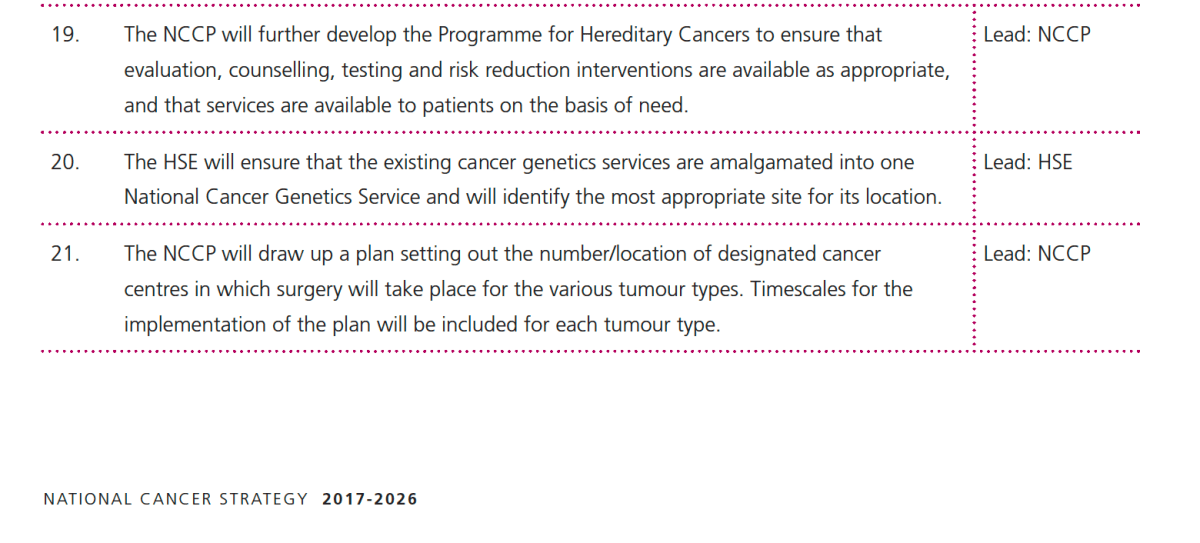
At present cancer genetics services in Ireland are underdeveloped and underfunded. Only a fraction of staff required are in place. As a result long waiting times, extra cost to the state because cancers are not prevented and discovered at a later stage.
More Evidence that Molecular Residual Disease Monitoring Could Guide Adjuvant Therapy in Colorectal Cancer
Studies have found that the ctDNA blood test can reliably detect “molecular residual disease” (MRD) – essentially, small traces of cancer left after surgery. Patients who test positive for MRD have a higher risk of their cancer returning.
In colorectal cancer, circulating tumour DNA (ctDNA) has become a minimally invasive and dependable prognostic biomarker for identifying post-surgical MRD and assessing the risk of recurrence.
In a recent update from the CIRCULATE-Japan GALAXY observational study, results reinforced previous studies demonstrating that monitoring ctDNA can help detect MRD and assess the risk of recurrence in patients with resectable CRC.