The English National Lynch Syndrome Transformation Project(UK)

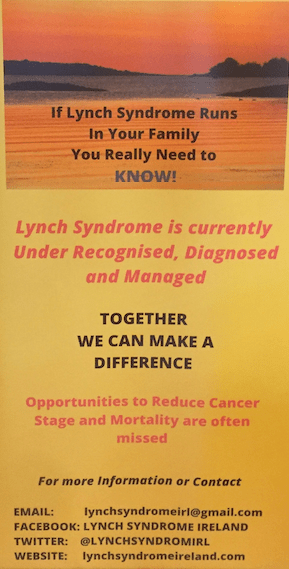
Lynch syndrome affects approximately 1 in 400 individuals and predisposes to multiple cancers including colorectal, endometrial, gastric, small bowel and other tumours. Although a common condition, it is estimated that only 5% of patients with LS are known in the UK.

Lifelong care of people diagnosed with this condition depends on awareness of who this population is.

There is consistent evidence of the cost-effectiveness and clinical benefit of a structured diagnostic pathway in patients with LS following a diagnosis of cancer linked to cascade testing in families. 

Barriers to diagnosis and a manifest deficiency in care for those with LS has been described in the literature as a ‘diffusion of responsibility’. 

An approach to deliver effective diagnosis is to develop ‘mainstreaming’ models whereby patients are offered constitutional genetic testing by their cancer treating teams locally, rather than relying on referral of eligible patients to tertiary services such as clinical genetics.

This has many possible advantages including shorter timescale to diagnosis, effective communication provided through an existing relationship between patients and their clinical teams, and ensuring that eligible patents access testing. This model is associated with high levels of acceptability for patients and clinicians, however relies on the development or new skills by cancer teams.

https://www.bsg.org.uk/clinical-resource/(sss)-english-lynch-syndrome-project

Why biomarkers matter

Your biomarker profile can help you and your doctor personalise your treatment.

Biomarkers for colorectal cancer are used for diagnosis, progression, prognosis, and for treatment planning.

MSI-H and MSS biomarkers indicate the stability of the DNA in a tumour.

Colorectal cancer tumours are often referred to as having an “MSI status,” meaning they are described as either MSI (microsatellite instable) or MSS (microsatellite stable). They cannot be both.

What does an abnormal MSI-H level mean?

Approximately 15% of colorectal tumours are MSI-H and dMMR.

In most of these cases, the mutation was caused by a non-hereditary(somatic) gene abnormality in one of the MMR genes (MLH1, MSH2, MSH6, or PMS2) in a cancer cell.

In 3-5% of colorectal patients, dMMR and MSI-H are caused by Lynch syndrome. In these patients, a hereditary mutation (germline mutation) in one of the four main MMR genes is passed from one generation to another. Individuals with Lynch syndrome are at higher risk of developing colorectal, endometrial (uterine), gastric, ovarian, and other cancers.

https://colorectalcancer.org/treatment/types-treatment/why-biomarkers-matter?fbclid=IwY2xjawGS4ZdleHRuA2FlbQIxMAABHbYOX7PocmBtDNPHc2xa9sZkA9PksceERIsPMZvOxLKfG4JN-vr7soOjmw_aem_irNH19G4iH7a4SZxGpm4Wg

The role of the Genetic Counsellor in the multidisciplinary team: the perception of geneticists in Europe(2022)

Genetics has begun to be considered a key medical discipline which can have an impact on everyday clinical practice. Therefore, it is necessary to understand what the most effective way is of caring for people affected by or at risk of genetic disorders.

This new profession has difficulties in being recognised in some countries(including Ireland), it seems clear that these highly competent professionals are essential for in-patient care and in the multidisciplinary team.

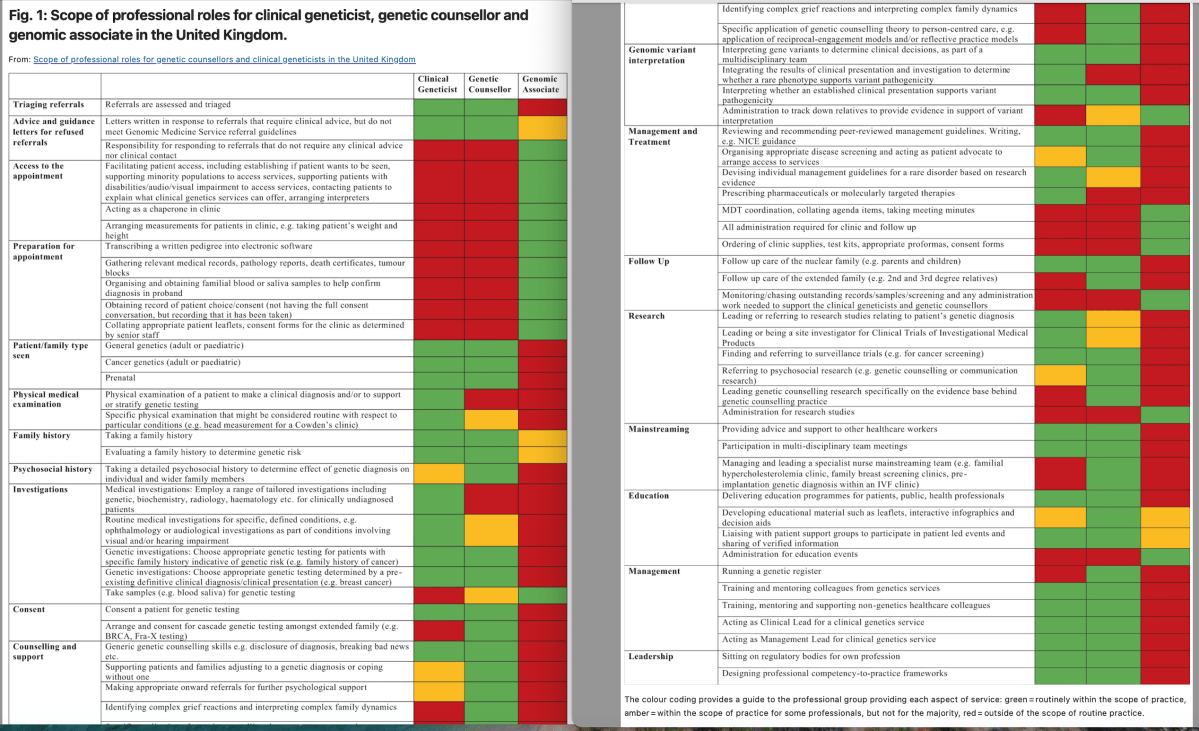
In the United Kingdom clinical geneticists are medically qualified Members/Fellows of the Royal College Physicians or equivalent, where Clinical Genetics is an affiliated medical specialty. Genomic or genetic counsellors are allied health professionals with Masters level accreditation from the Genetic Counsellor Registration Board included in the Academy for Healthcare Science register and clinical scientists (genomic counselling specialty) accredited by the Health and Care Professions Council. https://www.nature.com/articles/s41431-022-01214-7/figures/1

This research(although limited) brought to light the importance of the multidisciplinary team in caring for patients with or at risk of genetic disorders by highlighting the role and necessity of the genetic counsellor within the team. 

https://www.nature.com/articles/s41431-022-01189-5?fromPaywallRec=false

Worrying won’t change the outcome

It is so important to be vigilant for changes in your body that might be signs of cancer, BUT – it is not your fault if you get cancer, and feeling guilty about not “doing everything right” to prevent it can break people’s souls. @SarahFitzWiMIN

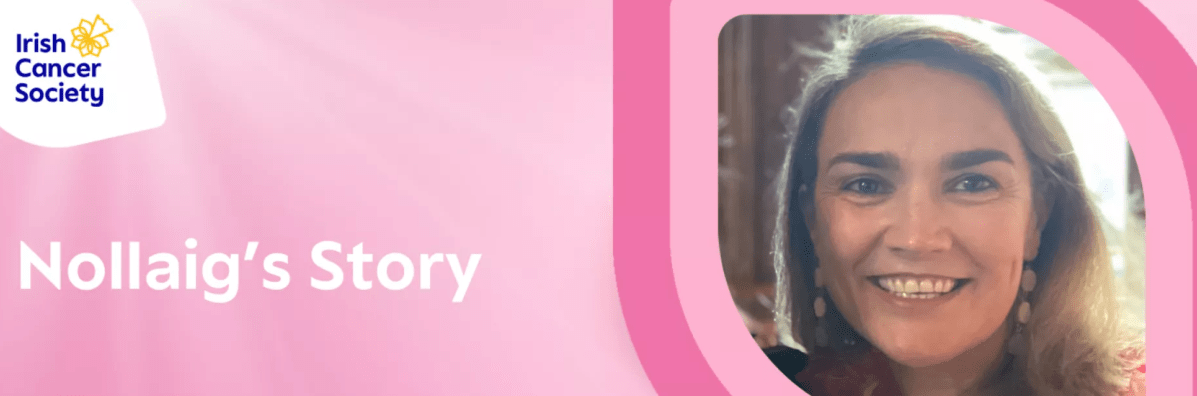
In addition to supports from the Irish Cancer Society and the support of her medical team, Nollaig has found great support through social media. “I came across a Facebook group of women at all different stages of triple negative breast cancer. Rather than reading up on it via Google, you are hearing directly from women who have gone through what you are about to go through. You learn to see that everyone’s experience is different.

Nollaig is sharing her story to raise awareness of breast cancer, but also to call for screening to start at an earlier age.

https://www.cancer.ie/about-us/news/nollaigs-story-i-thought-i-was-someone-who-did-check-but-now-i-realise-that-i-hadnt-been-checking

Laois rural artist urges people to mind their language on illness

Whether it’s the metaphor of ‘battling cancer’ or the image of ‘frontline workers’ during the pandemic, the author contended that metaphors distort our way of thinking since neither cancer nor Covid are stages of war.

“I have a predisposition to cancer as I carry a gene which is called Lynch Family Syndrome.

“Basically my body cannot detect that cancer is growing in the first place so it very quickly escalates to a grade 4 and because it cannot recognise the disease, it also can’t repair it without help.

“I’m lucky that I know my body well and that I can present myself in time to doctors who have the expertise and modern medicines to reverse the tumour growing.”

“Participating made me look at the psychological effect years after diagnosis. Themes of loneliness, isolation, fear, self-blame, anger and disassociation were explored.

The Role of Colonoscopy in the Management of Individuals with Lynch Syndrome: A Narrative Review

Rather than continuing to shorten the timing of endoscopic surveillance, other early diagnostic techniques and subsequent prevention strategies should be forecasted in order to allow a more effective and customised endoscopic surveillance of individuals with Lynch Syndome.

Subjects with LS need clear and repeated explanations about the value of endoscopic surveillance. Often, they also require psychosocial support. The usefulness of specialised programs aiming to remind patients of the dates of both exams and clinical follow-ups has been demonstrated 

Open Questions 

These hypotheses raise several questions: assuming that there is more than one pathway to CRC, what is the relative contribution of each? Are there different genetic backgrounds? Which are they?

https://pmc.ncbi.nlm.nih.gov/articles/PMC10417258/

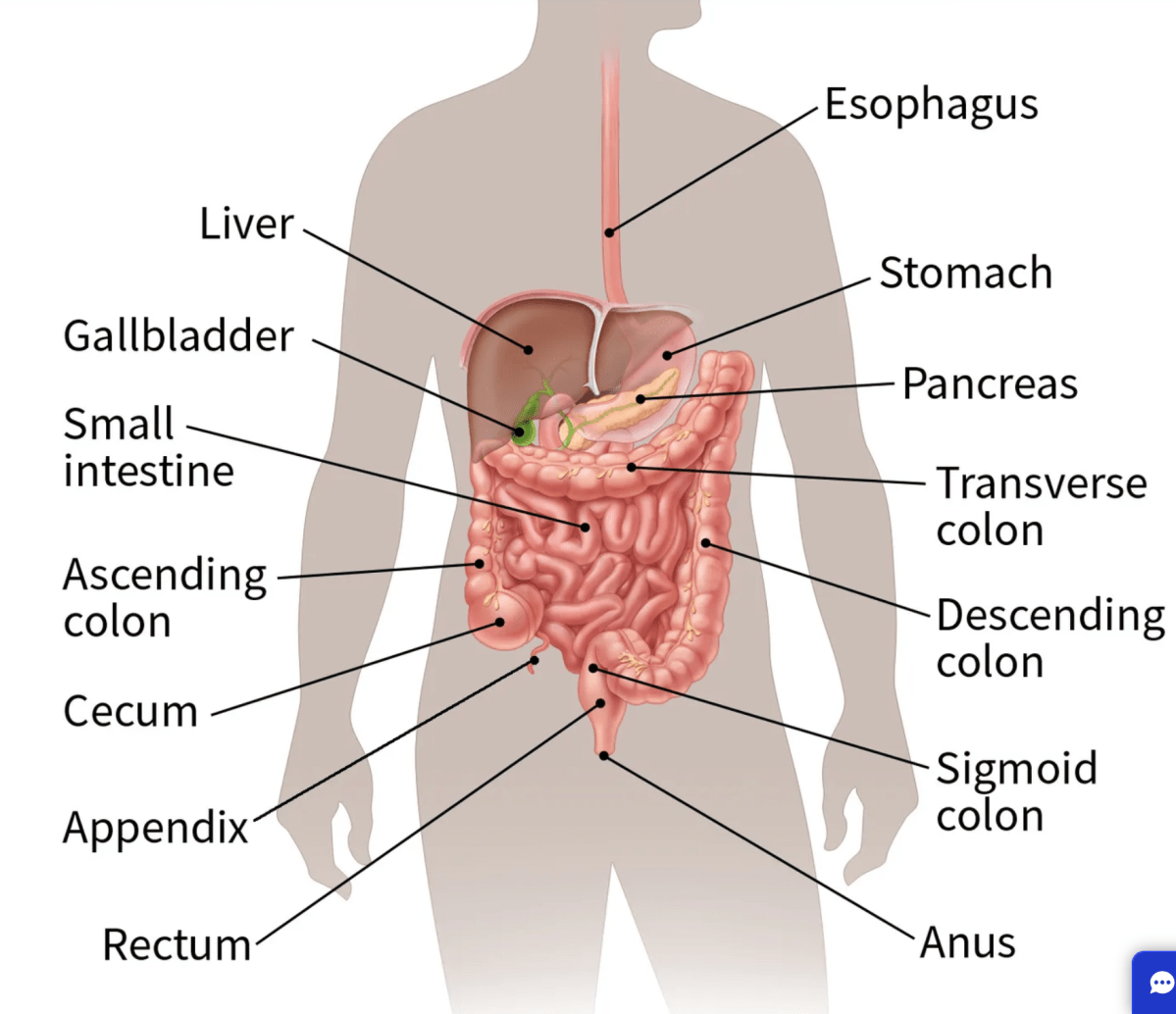
Colorectal cancer starts in the colon or the rectum. These cancers can also be called colon cancer or rectal cancer, depending on where they start. Colon cancer and rectal cancer are often grouped together because they have many features in common.

This article covers:

How do the colon and rectum work?

How does colorectal cancer start?

Polyps in the colon or rectum

How colorectal cancer spreads

Types of cancer in the colon and rectum

Be aware of signs and symptoms

It’s important for everyone to be aware of any changes in your body that are not normal for you, especially if you have an increased risk due to Lynch syndrome. Always get any changes checked by your GP, even if you have had a screening test or are due one soon.

https://www.cancer.org/cancer/types/colon-rectal-cancer/about/what-is-colorectal-cancer.html

https://www.cancer.ie/cancer-information-and-support/cancer-information/about-cancer/causes-of-cancer/cancer-and-genes/lynch-syndrome

THE UNMET NEED IN CANCER GENETIC SERVICES(2021)

This one of the recommendations of this report:

Implement a hub and spoke model with genetics expertise within the dispersed oncology system.

Genetics needs to be formally integrated into the cancer treatment pathway with uniform access to genetic testing, molecular tumour boards and access to genetics expertise and support at the point of care for both patients and their clinicians.

Where are we at now?

Lynch syndrome – Will I develop cancer?

Unfortunately, cancer is common, and in the majority of cases is not inherited. As many as 1 in 2 people will develop cancer in their lifetime. That is 50% of the world’s population.

Most cancers are not inherited and occur out sporadically or ‘out of the blue’.

Lynch syndrome makes certain (not all) cancer types more likely to develop. This is due having less protection from the cancer mismatch repair genes. This doesn’t mean that you will definitely develop cancer, but having less protection makes it more likely.

The way Lynch syndrome behaves in you and your family can be very different as the affected Lynch syndrome genes interact with other genes as well. Family history should be taken into consideration, but each family member will be affected differently.