Molecular Tumour Board

Molecular Tumour Boards (MTBs) are a specific type of multi-disciplinary tumour board meeting in which anonymized patient cases are discussed based on the patient’s clinical information and genetic sequencing reports. 

Their vision is to change the way cancer patients in Ireland are treated building on a Molecular Tumour Board.

By fostering collaboration on cancer treatment decisions among Irish clinicians with support of national and international experts from the medical and scientific community, the MTB is driving the transition towards precision oncology and personalised healthcare.

Guidelines for the management of hereditary colorectal cancer from the British Society of Gastroenterology (BSG)/Association of Coloproctology of Great Britain and Ireland (ACPGBI)/United Kingdom Cancer Genetics Group (UKCGG)

2019: A systematic review of 10 189 publications was undertaken to develop 67 evidence and expert opinion-based recommendations for the management of hereditary CRC risk. Ten research recommendations are also prioritised to inform clinical management of people at hereditary CRC risk.

Objective:

To provide a clear strategy for the management of people at hereditary risk of colorectal cancer (CRC), which includes diagnosis, endoscopic management, prevention and surgical care.

Lynch syndrome (LS)

  • We recommend that for all people when first diagnosed with CRC, testing using immunohistochemistry (IHC) for MMR proteins or microsatellite instability is used to identify tumours with deficient DNA MMR, and to guide further sequential testing for LS. (GRADE of evidence: moderate; Strength of recommendation: strong)
  • We recommend that colonoscopic surveillance should be performed at a 2 yearly interval for all LS patients. (GRADE of evidence: moderate; Strength of recommendation: strong)
  • We recommend that age of onset of surveillance colonoscopy should be stratified according to the LS-associated gene. We recommend colonoscopy from age 25 years for MLH1 and MSH2 mutation carriers and 35 years for MSH6 and PMS2mutation carriers. There are insufficient data to support stratifying age of onset of surveillance by gender. (GRADE of evidence: moderate; Strength of recommendation: strong)
  • We suggest that for LS patients with MLH1 or MSH2 mutations who develop colon cancer or colonic neoplasia not amenable to endoscopic control, the decision to perform segmental versus total/near total colectomy should balance the risks of metachronous cancer, the functional consequences of surgery, the patient’s age and patient’s wishes. (GRADE of evidence: Moderate; Strength of recommendation: strong)
  • We recommend that for LS patients with MSH6 or PMS2 mutations there is insufficient evidence for oncological benefit of extended colectomy over segmental resection. (GRADE of evidence: low; Strength of recommendation: strong)
  • We suggest that when abdominal-perineal excision can be avoided, a standard low anterior resection is a reasonable option to treat rectal cancers in LS patients, even though the residual colon is at high-risk of metachronous neoplasia. (GRADE of evidence: low; Strength of recommendation: weak)
  • We recommend that gastric, small bowel, or pancreatic surveillance in LS patients is only performed in the context of a clinical trial. (GRADE of evidence: low; Strength of recommendation: strong)
  • We recommend screening for H elicobacter pylori in patients with LS and subsequent eradication therapy if indicated. (GRADE of evidence: low; Strength of recommendation: strong)

https://gut.bmj.com/content/69/3/411#article-bottom

The role of the Genetic Counsellor in the multidisciplinary team: the perception of geneticists in Europe(2022)

Genetics has begun to be considered a key medical discipline which can have an impact on everyday clinical practice. Therefore, it is necessary to understand what the most effective way is of caring for people affected by or at risk of genetic disorders.

This new profession has difficulties in being recognised in some countries(including Ireland), it seems clear that these highly competent professionals are essential for in-patient care and in the multidisciplinary team.

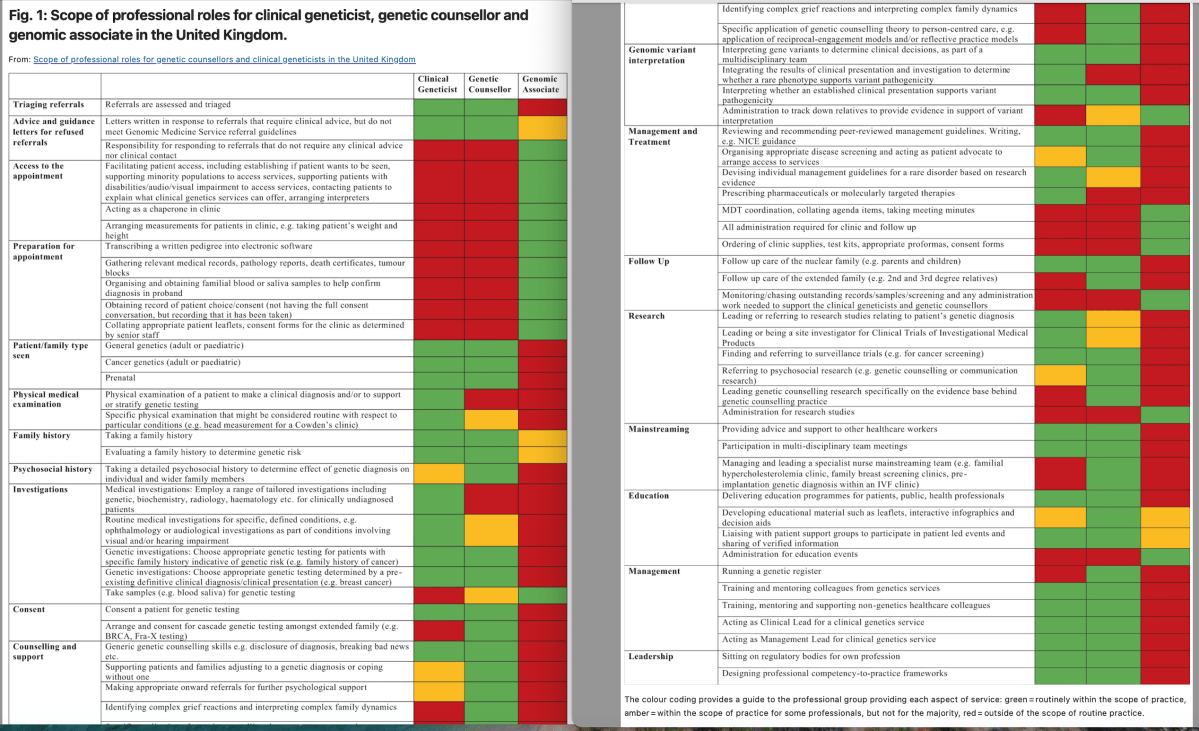
In the United Kingdom clinical geneticists are medically qualified Members/Fellows of the Royal College Physicians or equivalent, where Clinical Genetics is an affiliated medical specialty. Genomic or genetic counsellors are allied health professionals with Masters level accreditation from the Genetic Counsellor Registration Board included in the Academy for Healthcare Science register and clinical scientists (genomic counselling specialty) accredited by the Health and Care Professions Council. https://www.nature.com/articles/s41431-022-01214-7/figures/1

This research(although limited) brought to light the importance of the multidisciplinary team in caring for patients with or at risk of genetic disorders by highlighting the role and necessity of the genetic counsellor within the team. 

https://www.nature.com/articles/s41431-022-01189-5?fromPaywallRec=false

Worrying won’t change the outcome

It is so important to be vigilant for changes in your body that might be signs of cancer, BUT – it is not your fault if you get cancer, and feeling guilty about not “doing everything right” to prevent it can break people’s souls. @SarahFitzWiMIN

In addition to supports from the Irish Cancer Society and the support of her medical team, Nollaig has found great support through social media. “I came across a Facebook group of women at all different stages of triple negative breast cancer. Rather than reading up on it via Google, you are hearing directly from women who have gone through what you are about to go through. You learn to see that everyone’s experience is different.

Nollaig is sharing her story to raise awareness of breast cancer, but also to call for screening to start at an earlier age.

https://www.cancer.ie/about-us/news/nollaigs-story-i-thought-i-was-someone-who-did-check-but-now-i-realise-that-i-hadnt-been-checking

A NEW CHAPTER IN PROSTATE CANCER CARE IN IRELAND WITH IPCOR

Prostate cancer is the most common cancer affecting men in Ireland.

Thanks to the generosity of Movember fundraisers and donors across Ireland, we are proud to be partnering with University College Dublin on a new and improved Irish Prostate Cancer Outcomes Registry (IPCOR).

It’s all about tracking, learning, and getting better over time.

This research doesn’t just aim to treat the disease—it’s about improving the entire journey of care.

The Mo is Calling….IPCOR is only possible thanks to the generous support of our fundraisers and donors. Join the 12,000 strong Irish community making a difference in men’s health by signing up for Movember.

https://ie.movember.com/story/a-new-chapter-in-prostate-cancer-care-in-ireland-with-ipcor

What -7 years away from delivering a comprehensive electronic health record system for all citizens to replace traditional paper-based records. Who is in charge/responsible?

Is it the Minister? Is it the CEO? Hmm…. surely we could blame the Agency Cat.

The HSE is roughly seven years away from delivering a comprehensive electronic health record system for all citizens to replace traditional paper-based records.

In 2004…yes 2004..…Patients can expect improved and safer care under the new blueprint, which will modernise the gathering and use of health information, Health Minister Micheal Martin said. “AN ELECTRONIC healthcare record for all patients, allowing a range of information on their medical history to be automatically called upon, is promised under a new health plan launched yesterday“.

Now 2024.….An electronic healthcare record in 7 years? EHRs are currently standard of care in all developed western countries. A range of tried and tested commercial solutions have been available for a long time now. In 7 years, it will be 27 years since

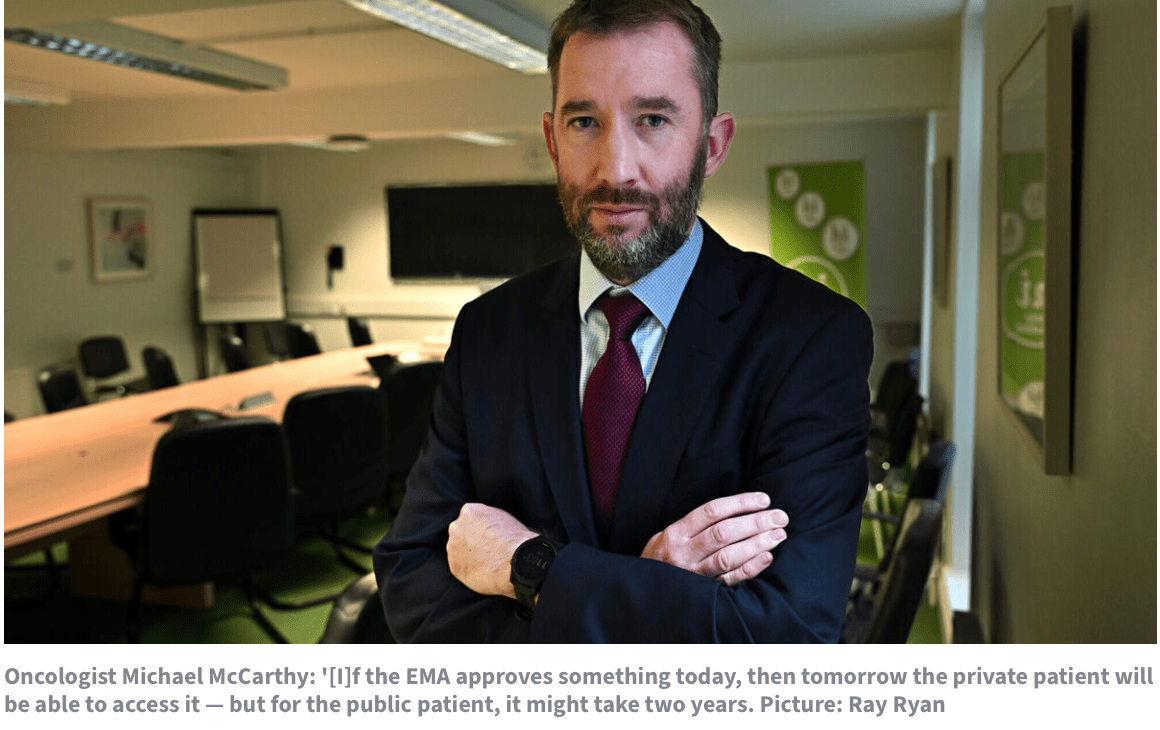
An oncologist(Michael Mc Carthy on X):….”The amount of time I spend every day logging in and out of 10 separate computer systems would boggle anyones mind. When I arrived in Mayo this morning, I had to enter my username and password 7 times to get into evolve. As a conservative estimate, I probably entered usernames and passwords about 50-60 times over the rest of the day. Hard to imagine, but true.”

People without health insurance increasingly unable to get cutting-edge cancer meds they need

While new best-in-class drugs are available privately immediately, EMA(European Medicines Agency) approval is only the first step in getting such treatments through the public drug reimbursement process. The pharmaceutical companies must approach EU health services separately for assessment even after EMA approval.

While new best-in-class drugs are available privately immediately, EMA approval is only the first step in getting such treatments through the public drug reimbursement process. The pharmaceutical companies must approach EU health services separately for assessment even after EMA approval.

“As things stand right now, if the EMA approves something today, then tomorrow the private patient will be able to access it — but for the public patient, it might take two years,” Dr McCarthy said.

Some 55% of adults in Ireland do not have health insurance, according to the latest figures.

https://www.irishexaminer.com/news/arid-41363869.html

Anticipation in families with MLH1-associated Lynch syndrome

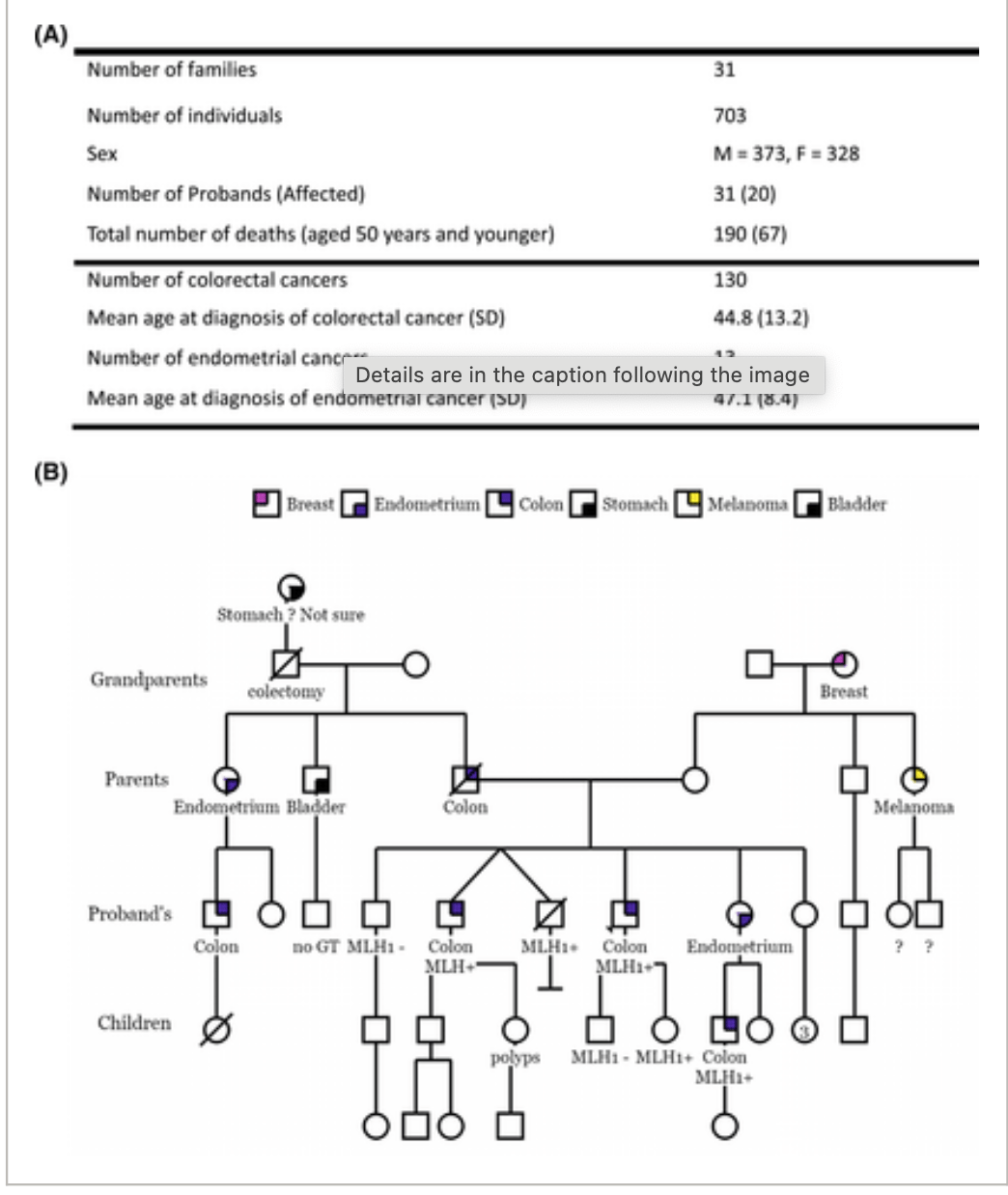
Individuals who have MLH1 PVs have high lifetime risks of colorectal cancer (CRC) and endometrial cancer (EC). There is controversy regarding whether a younger age at diagnosis (or anticipation) occurs in MLH1-associated LS. The objective of this study was to assess anticipation in families with MLH1-associated LS by using statistical models while controlling for potential confounders.

Conclusions

The current results demonstrated evidence in support of anticipation in families with MLH1-associated LS across all statistical models. Mutational effects on Mlh1 activity influenced the hazard for CRC/EC.

https://acsjournals.onlinelibrary.wiley.com/doi/10.1002/cncr.35589

Lynch syndrome diagnostic testing pathways in endometrial cancers: a nationwide English registry-based study

Background: For female patients with Lynch syndrome (LS), endometrial cancer (EC) is often their first cancer diagnosis. A testing pathway of somatic tumour testing triage followed by germline mismatch repair (MMR) gene testing is an effective way of identifying the estimated 3% of EC caused by LS.

Conclusion: This analysis highlights the regional variation in recorded testing, patient attrition, delays and missed opportunities to diagnose LS, providing an informative baseline for measuring the impact of the national guidance from the National Institute for Health and Care Excellence on universal reflex LS testing in EC, implemented in 2020.

https://jmg.bmj.com/content/early/2024/10/21/jmg-2024-110231